Monday, 6 June 2011

Seasonal eating: cooking on the wood burner

We're having a cold snap, with strong winds and snow in the mountains. It's cool enough to want the fire burning on low if you're in the house during the day (the wood burner is my only form of heating in this house).

If you're going to have a heat source running, it makes sense to use it for food, right? Many of our favourite recipes as a culture evolved to be cooked over a long period over a low fire for the simple reason that was the only source of heat available. Casseroles, roasts, soups, stews. I've often felt that in many ways it's a waste to try to replicate that long-lived heat source using eletricity for long periods of time. Fortunately, although not a cooking stove, my slow-combustion wood burner has two removable grills at the front which allow a cooking vessel to come into contact with the iron of the burner box. Or sit just above it if it's slightly too wide, as is the case with my bean pot.

The meal in question this time was a Mexican fava bean soup, spiced with mint and pasilla chillies. In some places you can buy the fava beans skinned but here I have to buy them whole and skin them. First, I soaked dried fava beans overnight and removed their skins. This is a fiddly process but the end result makes it worth it.

Next I put a small saucepan of water on the woodburner box and brought that to the boil. The water, when boiling, was added to the beans and over the next few hours various seasonings were added as well.


By dinner time I had a lovely delicious filling soup, with no input of elecricity required. Added satisfaction.

Sunday, 15 May 2011

Sunday update

The garden, such as it is at the moment

I'm recently back from a period of time spent mostly at sea. There's very little sustainable about life at sea! Everything you need must be taken with you. It's nice to be home and able to move a little further down the path to self sufficiency.

Because I've been away so much, I've done little gardening, or cooking, around the house in the last month, although I have achieved two things of note: I've managed to enjoy the last of the summer courgettes, a gift from my neighbours. I'm eating the last one tonight to commemorate the end of summer: there was snow on the mountains around my house yesterday. The other thing I've achieved is to cook an entire meal on top of the slow-combustion woodburning stove. It's not designed for cooking, but by removing the grates on top I've manged to cook a delicious pot of Mexican fava bean, pasilla chilli soup with coriander and mint.

The one thing I have been doing the few days I've been around is to haunt the garden centres to snap up any plants on sale, as they wind down their summer stock. In this way, I've managed to amass the lush offerings you see in the photo above. I've been focusing on hardy plants that will make it through the winter. So far I've managed to collect, all at half-price or less:

Standard bay tree
Four avocado trees - two bacon, two hass
Two lemon trees - one Meyer, one Lisbon
and lots of herbs.

The rest of the pots you see contain asain stir fry greens, broccolli and leafy salad greens. Plenty for me to graze on. And the odd flowering plant, as they're food for the soul. My bathroom, having a skylight, contains a kaffir lime tree, a curry leaf tree and the non-hardy chilli plants, which have still-ripening chillies. I'm starting to feel like I can make a meal from my garden again.

I'm at the end of my very busy time now, so I'm going to be around more frequently from now on.

Sunday, 27 March 2011

Sustainability Mondays: back, if only briefly

I got back from the UK last week, after a wonderful week of seeing Mr G and doing the rounds of visiting friends and family. I have a week at home before leaving again, but the rare occasion of an entire weekend at home with no external plans (the first in months!) allowed me to make some steps forward on the grand plan. A week's absence really made a difference to my meagre little garden as well, with the summer garden starting to blush and show rewards.


1. Plant Something -
  • I built an autumn veg garden! I used an existing framed-but-not-full garden bed, dug over the soil, lined the base with removalist's paper from the move, then filled with the contents of my two Bokashi buckets and topped with potting mix. I've planted this and four pots with eight punnets of veg seedlings bought from a local small-family herb growing business.
  • Asian green seedling: tatsoi, bok choy, mizuna and mixed asian greens
  • Lettuce, mixed pick-by-leaf varieties
  • a mix of green-sprouting, purple sprouting and romanesco broccoli
  • Purple violetta cauliflower
2. Harvest something - (including buying local food)
  • Wild apples from the roadside near my place
  • Nashi from a colleague's tree
  • Lettuce leaves and spring onions from the summer garden
  • tomatoes from the potted tomatoes
  • Habaneros: about 10, from two plants in pots, and lots more ripening
  • Curry leaves from my curry leaf tree (now ensconced in the bathroom)
  • Lots of purchased locally-grown garlic
  • Asian greens, spinach and courgettes bought from the local market gardeners.
3. Preserve something -
  • I had plans to make a fruity HP-style sauce from the apples and pears but it hasn't happened yet. I might try to get to the during the week.
  • Lots of sourdough bread baked and stored in the freezer
4. Waste Not (reducing wastage in all areas)
  • Used the compost and spent tomato plants to make the fertile base of a garden bed.
  • Recycled the tomato pots to plant asian greens into.
5. Want Not (preparing for shortage situations)
  • Nothing this week.
6. Build Community Food Systems
  • Supporting local people who are growing food.
7. Eat the Food
  • With my own tomatoes and habaneros, lettuce and spring onions and locally grown fresh garlic, what else to eat but Mexican? I've made lots of fresh salsas and eaten that in various ways. With home-made sourdough tortillas and my own bread.
8. What I bought:
  • Baking stone and pizza peel
  • Plastic utility trug, to act as a washing basket/general tote
  • A new computer: the old one has been increasingly unreliable and crashed on Saturday.

Sunday, 6 March 2011

A hiatus already!

I'm taking a few weeks off from Sustainability Mondays. This week, because I haven't done anything much new in terms of being sustainable other than slowly using up the veg in my fridge (but nor have I bought anything!), and for the next two weeks because I'll be travelling to and from the UK. My life will remain busy and full of travel until mid-May.

Happy sustainability to you all!

Thursday, 3 March 2011

Seasonal eating: zucchini, halloumi and harissa tagine with couscous

This is a recipe I came up with to use up one of the giant zucchinis the neighbours gave me, in addition to a number of leftovers in my fridge from a housewarming and guests. It's a good way to make a spicy, wholesome meal out of a zucchini and would be vegan if the halloumi were omitted. The halloumi in this case was a ewe's-milk version, made by Grandvewe cheeses.

Zucchini, halloumi and harissa couscous
Would feed 4, or 1 for many meals!

3/4 cup couscous

2 tbsp olive oil
50 g halloumi, cut into dice
1 onion, chopped
3 cloves garlic and 1-2 chillies, minced together (I used a jalapeno and a Thai chilli in this case)
1 carrot (I used a purple one), finely chopped
1 large or 2 small zucchini, cut into small dice
3 roma tomatoes, cut into 1-inch chunks
2 tbsp ras el hanout
2-3 tbsp harissa (or more, I used about 1/4 cup as mine was home-made and mild)
2 tbsp each chopped fresh mint, coriander and parsley
1/2 vegetable stock cube, or 1 cup vegetable stock
1/4 cup olives (optional: I used lemon-garlic marinated green olives and tossed in the lemon slices as well)

Add the couscous to a cup of boiling water, cover and allow to sit while preparing the rest of the meal.

Heat the olive oil in a large saute pan or wok and fry the halloumi until crisp on the edges. Add the onion and cook until softened, then add the garlic, chilli, carrot and zucchini, frying over a medium-high heat until the zucchini starts to brown. Add the tomatoes, stock cube (if using), ras el hanout and harissa along with a cup of water or stock and cook for 10 minutes, or until the sauce has thickened slightly and the tomatoes have softened but not disappeared. Taste and season with salt to taste, adjust spices if required. Toss the mint, coriander and half the parsley through the dish. YOu want there to be quite a bit of liquid still in the dish as this will be soaked up by the couscous

Fluff the couscous with a fork and tip into a serving bowl. Pour the tagine over the couscous and garnish with the reserved parsley. Eat piping hot.

Monday, 28 February 2011

Sustainbility Mondays: the house full of guests edition

I've had a house full of family for the past week, which has made this week's sustainability Monday post late (I dropped my visitors off at the airport this morning). Considering we had a busy holidaying household this week, I think that some of the following isn't bad!

1. Plant Something -
  • Struck some rosemary cuttings.
2. Harvest something - (including buying local food)
  • As much local cool-climate fruit as we could find to buy from farmgates, much to the delight of the visiting Queenslanders
  • Veg from the farmers market and roadside stalls, particularly the last of the summer's broadbeans, some more garlic and local unheated honey
  • Wild apples and blackberries from the roadside near my place
3. Preserve something -
  • Blackberry jam and bottled blackberries. None of which made it into my pantry, preferring a life in the warmth of Queensland instead.
4. Waste Not (reducing wastage in all areas)
  • After having a house full of people we only had a single shopping's bag worth of rubbish for the week. Buying locally really reduces food packaging which is part of the challenge.
5. Want Not (preparing for shortage situations)
  • Nothing this week unless you count the absconding jam
6. Build Community Food Systems
  • Supporting local people who are growing food.
7. Eat the Food
  • Every meal we ate was made of locally bought or foraged food, which made us happy.
8. What I bought:
  • Nothing this week, aside from an awful lot of petrol. There was a lot of touring around!
  • My visitors bought local jams and honeys to take home.

Monday, 21 February 2011

Sustainability Mondays: starting again

This is about all there is of my veggie garden at the moment: a few tomatoes,
chillies and herbs in pots, along with a treasured curry leaf tree.


This is a bad day to be starting sustainability Mondays, because I've achieved a big fat fail on many of my resolutions in the past week. But it's a good place to record beginnings.

1. Plant Something -
  • Nothing this week.
2. Harvest something - (including buying local food)
  • lettuce and salad greens
  • herbs from my garden and that of a friend
  • two courgettes from the neighbours
  • ...but I did manage to buy all of my veg from the local market gardeners
  • Bought locally-grown dried chickpeas, puy lentils and garlic
3. Preserve something -
  • Harissa
4. Waste Not (reducing wastage in all areas)
  • I really failed here. Bad: I hosted a BBQ on Saturday which has resulted in a lot of empty glass bottles (which I will take to the recycling centre in due course), and also bought several bottles of softdrink to have something to offer the drivers. I never drink softdrink so I was taken aback at how expensive, bulky and wasteful of plastic it is.
  • Bad: I have bought quite a bit of bedlinen, all of which came wrapped in plastic. Most of which is now in the bin because it can't be recycled even as bin liners: fail.
  • Good: But at least I've purchased a second-hand washing machine which is very water and power-efficient.
  • Good: purchased a second-hand BBQ grill plate and old recycled colonial bricks with which to make a bookcase, from the tip shop.
5. Want Not (preparing for shortage situations)
  • Bought 10 kg of potatoes from a colleague's garden, which will probably last me through the winter
  • Used the BBQ to lay in a few small drygood supplies for variety.
  • Otherwise, nothing much this week. Money earmarked for the stockpile has gone to other household essentials this week.
6. Build Community Food Systems
  • All of my house guests were intrigued by my lifestyle, and many are fellow souls (this being Tasmania!)
  • Blogging about it
  • Supporting local people who are growing food.
  • Exchanging goods and favours with my neighbours. I gave them travel tips and coffee, they gave me zucchinis and helped me build the frame for my bed.
7. Eat the Food
  • Herbs and lettuce leaves from pots
  • The local potatoes, in potato salad
  • Local butternut squash, puy lentils and red onions, turned into a warm salad over harissa, lemon juice and olive-oil dressed salad leaves
8. What I bought:
  • Way too much!
  • Plastic: a vacuum cleaner and a dustpan and brush. Plastic around pillows and quilt covers. Softdrink. And veg which I'd rather be growing.
How was your week?

Wednesday, 16 February 2011

Self sufficiency goals for 2011

It's mid-February, but I think that any day is a good day to make resolutions. Actually I rarely make conscious resolutions, but these ideas have been coalescing in my head for a while and I think it's a good idea to write them down to check progress at a later date.

A warning first: I've been working very hard lately and haven't had a day off in weeks, so I am very tired and I'm probably going to ramble. Part of what has inspired this post is a fortnight spent away doing a course to update a certification, and living in residential halls eating cafeteria food while doing so. The lower quality of the processed food compared to what I'm used to and the waste I saw set my brain in motion (that's not to complain about the cooking, which was fabulous considering what the cooks were given). It's the quantity vs quality of food debate.

My thoughts went thus: it's all very well to boast about how far one is down the path when they've gone a long way towards self-sufficiency, but when you've imposed the kind of setback I've imposed upon myself by changing country and starting all over again? I may be immodest to say so, but that could be interesting. Most people who start down the self-sufficiency road from a standing start do so from scratch. What difference doe it make if you do so with the accumulated knowledge of spending 15 years living the lifestyle? The concept of having a clean slate in terms of possessions appeals to me. So I've formed the following goals for myself for 2011.

As a beginning, I eat no processed food, I eat no meat (because that's how I like to live), and try to buy food as locally as possible. I bake all our own breads and we tend not to eat sweet stuff or snack foods. Our weaknesses are booze, salt and spicy foods. And travel. In some ways, it doesn't matter how much I live a sustainable lifestyle, my life dictates that I will fly around the world 2.5 times this year and from a carbon viewpoint you could view any efforts at sustainability as futile. But that's missing the point: every lifestyle choice we make counts. Most carbon generation comes from industry, and that is fuelled by the expectations of consumers.

The goals:

  • Chart my progress more assiduously. To that end, sustainability Mondays will restart next week, allowing myself weeks off for the times I'm at sea.
  • No plastic is to enter the house unless absolutely necessary. This is particularly salient in a household that does not yet own basic cleaning items, like toilet brushes or brooms.
  • Until a vegetable garden is established, limit food purchasing as much as possible to locally sourced items. Again, a big point at the moment as I'm in what is a temporary household. Exceptions to that which I'm going to allow myself are avocados, lemons and passata.
  • Build an emergency store. I've felt vulnerable, knowing I don't have food in the house.
  • Minimise food packaging. I'm going to accomplish this, inn juncture with the previous three points, by buying dried foods in bulk and storing them in glass.
  • Find some decent land to buy, and on which Mr. G can build a house. This won't be a forever home, but that's all part of the grand plan to live debt free.
  • I should probably also add: import Mr. G, who is not here yet but will come here later in the year.
  • Everything that is to enter the house must be purchased in as sustainable a manner as possible. This is not too difficult because we do live a fairly frugal lifestyle, except for certain luxuries. (*cough*wine*cough*)
  • No clothing from China, especially if it's made from cotton (now guaranteed to be GM). In fact, GM nothing.
  • Increase the amount of our own clothing that is home-made as much as possible. This includes wearing existing clothing until it is worn-out.
  • Learn better how to sew and more about dressmaking and shirtmaking. I already spin, weave and knit. Learning to sew will capitalise on the ability to make fabric.
  • For now: finally start brewing beer.
  • For winter: collect seawater and make salt over the wood fire. In the meantime, I'm buying Murray River salt, which uses oversaline water and makes salt from that. It's yummy, gives us minerals and combats soil salinity, all at the same time.
  • Conserve water. I suspect this one will be easy because this house is on tank water, and every time I touch a tap a pump audibly kicks in in the attic. It makes you think twice about your consumption.
It's going to be interesting to see how these goals change over the rest of the year.

Monday, 17 January 2011

Sustainable eating and the greand plan

This photo is just to make yarninmypocket jealous. Yes, that's a woodburner in the corner (actually, it's the only heating in the house!).

Despite the fact that I've been living in a small flat for the last couple of months, I've scored well on the sustainable living front. Of course, it's easy to do so when you move to an area that has a strong primary produce industry, thriving markets and people who make their living growing market gardens. Most of the food I've been eating has been bought from the market gardeners and grown locally: luscious summer berries, green veg and lately, local tomatoes. Even locally made goat's milk yoghurt, which is absolutely luscious. I'm proud that in six weeks I've only visited the large supermarket twice. I've also been baking my own bread after buying a mere two loaves from local artisan bakers. It's going to sound dangerously like boasting, but I didn't like their bread as much as my own!

As most people will know, Australia has had a devastating series of floods in the last couple of months. The areas that have been hardest hit have been the rich, fertile vegetable-growing areas which are, of course, built on the immensely fertile flood plains of large rivers. There is already a shortage of many fresh veg in the country, and prices will rise. Something that shocked me in the media coverage is how many households ran out of food withing just a day or three of being cut off from shops - despite being warned that the flood was coming, they are so disconnected from their food supply they failed to prepare adequately. This kind of thing makes it even more important to take control of one's own consumption. My household could live for at least a month (and possibly more based on how much I failed to run my UK pantry down) out of the normal contents of my pantry, although that's not the case at the moment.

Which brings me to the plan to set up our sustainable lifestyle anew here. Obviously there's going to be a certain initial investment required, but I intend doing it in steps. Our new rental house is a good start: it's on tank water with a septic sewage system and its only heating is from a woodburner (something that is sustainable if managed properly on a highly forested island, controversial as logging is). That's a good start for keeping our consumption on the property.

The next step will be to get veggie gardens set in. As I know this will be a short-term property, obviously we don't want to do too much, but we want some food in the ground. I've just missed the major summer planting time, but I'm just in time for one or two late-planted summer veg and the autumn planting. I'll post more about that over the next week or so.

The next step is to set up the food reserves. One of the reasons I do this is because it's cheaper to buy in bulk, and it can make it easier to buy staples from local producers who may only sell wholesale. But it also means there's a food reserve that can get you through the lean times. Things like rice and beans can be hard to buy from local sources - these are often imported - but I can at least work on growing my own beans. I've heard of a windmill in the nearby area which grinds grain, and I intend checking them out as soon as I have some free cash, with the intention of laying in flour for baking.

The important thing is to do this in little steps and pay attention to what's going on around me. I know effectively nothing about the property I'm moving to yet. I don't know where the light falls, what the soil is like, and how many local critters are likely to eat every seedling I put in the ground. I'm almost certainly going to have to protect seedlings. It's a matter of watching and learning before rushing in.

Sunday, 16 January 2011

New starts

Otherwise known as "why I no longer call this blog backyard self sufficiency".


This blog started life as my attempt to track efforts in maintaining a self-sufficient lifestyle while stuck in the city. As a result of my move, that's no longer the case!

After two months in temporary accommodation, I'll be moving this week to a small rural property in the Huon Valley region of Tasmania. This is the view from the front verandah. There are even a couple of promising-looking wineries just down the road. The house is on a 1-acre block and we'll be living here for a year or so, which is enough space and time to relax and enjoy the wildlife and get to know the area while looking about for an acreage to buy.

I'll be camping in the empty house for the first 10 days, before the furniture arrives. But the veggie garden starts in two day's time. Watch this space!

Wednesday, 10 November 2010

Breakdown

This is what my backyard veggie garden looked like, a month or so ago: green beans still fiercely climbing up the bean frame, romanesco cauliflower and brussels sprouts happily growing away in the near bed, and lots of chinese greens, lettuce and spinach dotted around. Sunflowers and flowers in the pot.


This is what my veggie garden looked like when I got home from a week-long business trip yesterday.

Mr G had been kind enough to pull down the netting frame he'd done such a good job of building. He described it as one of the saddest jobs he's needed to do. But there's an excellent reason: we're moving out of our lovely little rented house.

I removed all the veggie plants yesterday and raked the compost out over the lawn to act as a top-dressing. It will do it a lot of good.

The reason we're moving is because I've just accepted a job in Australia and will be moving there at the end of the month. Then the search will begin for some land on which to build a new garden!

Monday, 27 September 2010

What do we really want from our food?

It was a wet, windy, drizzly day yesterday, and Mr G and I were feeling somewhat lazy. In a rare event, we had a nice long sleep-in, a prolonged brunch, and sometime in the mid-afternoon wandered down to our local pub for a friendly pint. It's such a wonderful luxury to have an excellent pub at the end of your street. We don't avail ourselves of it anywhere near as much as we fell we ought but we enjoy going and want to patronise it so it keeps going. This pub has an endlessly changing list of two guest ales. The one we chose was hoppy, crisp and refreshing.

While we were enjoying our pints, a man came around offering everyone a lovely, steaming hot roast potato - it was Sunday afternoon, after all! The potatoes were delicious - crispy and golden on the outside and fluffy on the inside - and went really well with the ale, but something troubled me about them. Then it hit me.

All of the potatoes were exactly the same size. They came from potatoes that had been mercilessly graded, then cut in half and prepared. This was how I knew that they'd come out of a packet, rather than straight out of someone's field. Nothing like my roasties, which are made with whatever potatoes are in the top of the sack and can involve sizes from giant to quite small. I cut them to an even size, which leaves them a variety of interesting shapes.

It's yet another example of how people have been educated to believe that what they want is consistency, when really we'd all be much happier if we chose our produce with the primary concern being taste.

As an addendum, I'd like to say that we did get some stuff done with the rest of our day! It was a bread baking day, and there was quite a bit of sorting, cleaning and cooking achieved with the rest of the afternoon.

Friday, 24 September 2010

Seasonal eating: zucchini and parmesan soup with garlic ciabatta

We've been on holiday lately and came home to 10 kilograms of zucchini in the allotment. I've managed to give a lot away, but wanted to use some fresh for some wholesome soup. Mr. G isn't really a soup fan, but I think I won him over with this. This is delicious, tasty, wholesome and satisfying, and if you choose your chilli right it's spicy too. I ought to make vegetable stock but I rarely think of it in time, so happily use a good quality vegetable stock cube.

No photos, because it all got gobbled up in short order, so you'll have to believe me it's pretty.

Zucchini and parmesan soup
Serves two. Easily expands to serve more, or have some for freezing.

1 tbsp olive oil
1 small onion, chopped
3 cloves garlic and one chilli, finely chopped together
15 leaves basil, torn
2 small-medium zucchini, or two large ones (about 200g), chopped into 1/2-inch dice
1 vegetable stock cube
2-3 cups water
1 tsp soya sauce
1/4 cup (about 30g) finely grated fresh parmesan, reserving a little for the garlic bread (if you have a parmesan rind use it in the soup too)
salt and freshly ground black pepper to taste
1 tbsp finely chopped parsley

Heat the oil in a saucepan and fry the onion for 2-3 minutes. Then add the basil, garlic, chilli and zucchini and fry for 10 minutes over medium heat, stirring to ensure they don't stick, until the zucchini start to brown. Add the water, stock cube, parmesan rind if using and soya sauce, bring to the boil and boil for 5 minutes. Remove from heat and remove parmesan rind. Blend either in the pot with a stick blender or use a normal blender. Return pot to the heat, add parmesan and cook for 5 minutes more, or until required consistency. Taste and adjust for seasoning. Serve in bowls with a grinding of black pepper and the parsley scattered over, with the garlic bread on the side.

Garlic ciabatta
Makes two. Make this while the soup is boiling.

1/2 small ciabatta, cut in half horizontally as though for a sandwich
2-3 cloves garlic
1 pinch coarse salt
2 tbsp olive oil
1 tbsp parmesan (optional)

Pound the garlic and salt together in a mortar and pestle, or alternatively chop the garlic finely and crush the garlic and salt together on the chopping board with the flat of a knife. Add the olive oil and stir to blend. Let these sit for a few minutes so the flavours can permeate. Spread this garlic oil over the cut surface of the ciabatta: I use a pastry brush for this. Sprinkle the parmesan over if using. Bake in a 180C oven for 10 minutes or under a grill for 5 minutes, until the bread is toasty and the garlic and cheese are golden.

Monday, 9 August 2010

Sustainability Mondays: the summer squash edition!

Above, clockwise, from front centre: a giant white patty pan squash which hadn't been there a few days before, smaller patty pan squash with flower, spaghetti squash, "Zucchini" zucchini, "Striata" zucchini, half a "Trombocino" zucchini, a small golden zucchini, the back end of a trombocino (flower visible in the background), and (bottom) a "Black beauty" zucchini. All harvested on one day!

1. Plant Something -
  • Planted out some very advanced tomato seedlings from pots and potted on some chillies.
2. Harvest something -
  • spinach
  • lettuce and salad greens
  • herbs
  • courgettes and other summer squash
  • 3 spaghetti squash
  • chillies
  • French beans
  • cherry tomatoes
  • Moneymaker tomatoes
A selection of tomatoes and chillies with the odd pea pod and broad bean pod thrown in for good measure

3. Preserve something -
  • Nothing this week
4. Waste Not (reducing wastage in all areas)
  • The usual things
5. Want Not (preparing for shortage situations)
  • Hardened some spaghetti squash for storage by putting them in the sun for a few days to cure. Although I'm not sure they're going to last long enough to need that.
  • Bought a kilo of hard winter wheat berries to try out with the flour grinder, to use for baking soon. Probably this coming weekend.
6. Build Community Food Systems
  • The usual
7. Eat the Food
  • Baked a spaghetti squash, cut into two halves, seeds hollowed out and filled with a red kidney bean chilli. Delicious. Will do again very soon.
  • lots of green bean and tofu dishes
  • Made more of the intensely courgetty pasta sauce. I'd intended to freeze some, but it made it to our bellies before it made it to the freezer.
  • Lots of salad with greens, baby carrots, radish and beetroot
  • It may not count, but I had some of yarninmypocket's fabulous home-brewed beer. Hey, I enjoyed it, surely I can count it as "eating the food"!
The squash row. It was well prepared with horse manure before planting.

8. What I bought:
A pound of red kidney beans and a kilo of wheat beans.

Tuesday, 3 August 2010

This is why you don't let your onions set flower heads

I'm always careful to pinch out onion flower stems (not least because they're so yummy), but what I've never seen is what happens if you let them grow. Many of my onions this year are in a remote plot in a friend's back yard this year, and I tend to only go to visit them once a fortnight to control the weeds. The onions there were planted as sets last autumn, so come the spring some of them flowered quite early. It took enough time for me to find them that the onion stems were quite large and stiff. But I snapped them down and let them grow to see what would happen to them. I harvested and cut one open, this weekend, and the end result was what you see in the picture below.
This is the bottom of the onion. You can see the very thick base of the flower stem in the middle of the onion, with a wrinkled layer of 'normal' onion layers around it.


I chopped up the wrinkled bits at the outside of the onion and cooked them normally. They're absolutely fine to eat, even if they look a bit strange. Onions that have set flower stems need to be eaten quickly however, as they will not keep. I don't think this one would have lasted another month.

The onion flower stem itself is very hard and woody. If you click the picture above for the larger image you'll be able to see the cellulose cells which have formed to support the thickness of the stem and the size of the flower head. Not even I would eat this, I think it would be too woody to be pleasant. It was put out in the compost heap instead.

As it was so far along, I could have left this onion to flower and set seed, but if you think about it, that was the last thing I'd want to do. This was the first onion to set seed, and keeping and using its seed would propagate early-flowering onions. That's the last thing you want if you're planning to store them. Great if you're after pretty allium flowers of course, which is how the ornamentals came about. If you want to save seed, always let two or three of your best-producing plants go to seed. In this case, it would be the last to flower.

Monday, 2 August 2010

Sustainbility Monday: the not-much-done edition

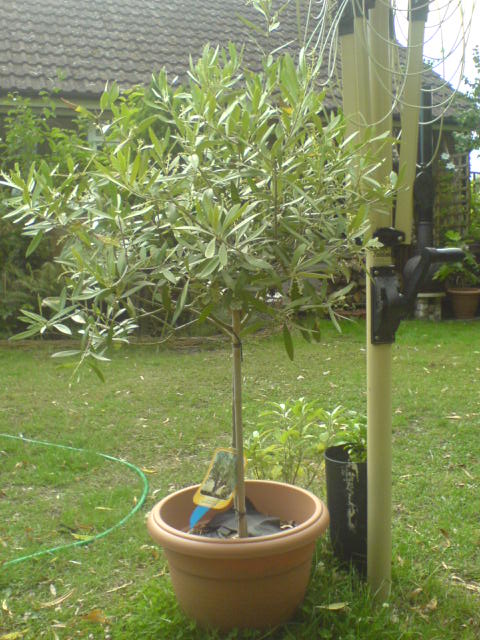
For Leigh: my special little olive tree that lives todis prove the belief that you can't grow olives in the UK.

It's been the kind of week in which things other than the garden get done, although significant time was spent at the allotment removing all the deep-rooted weeds that had set in there while the ground was like concrete. We've had two good lots of rain lately so I wanted to get that job out of the way while the soil was still soft.

1. Plant Something -
  • Nothing this week although I did catch up on all the weeding.
2. Harvest something -
  • spinach
  • onions
  • potatoes
  • lettuce and salad greens
  • baby carrots
  • herbs
  • courgettes
  • beetroot
  • chillies
  • egg (singular)
  • runner beans
  • French beans
  • orange cherry tomatoes
3. Preserve something -
  • Soaked several pounds of morello cherries in vodka, to turn into cherry liquer and later glace cherries
4. Waste Not (reducing wastage in all areas)
  • The usual things
  • Turned the compost
  • Checked through the store cupboard to make sure nothing was nearing its use-by date and needed using. I'm pleased to report that nothing is.
5. Want Not (preparing for shortage situations)
  • Did my tri-weekly baking as well as making ciabatta and pizza bases
  • Bought a mini-BBQ to save pulling out the big one every time I'd like to char-grill a few veg.
6. Build Community Food Systems
  • The usual
7. Eat the Food
  • Peppers and courgettes grilled on the BBQ, as well as BBQ tofu as a pre-preparation for tonight's dinner.
  • lots of green bean and tofu dishes: Mexican mole and Malaysian stir-fries
  • Potato and green bean curry
  • Lots of salad with greens, baby carrots, radish and beetroot
  • New potato, caper and lemon-thyme pizza

The olive tree is covered in hundreds of tiny olives at the moment.
8. What I bought:
Antipasto-type stuff to put on pizzas.

Friday, 30 July 2010

Broad bean trials: results from 2010

This was the broad bean patch a couple of weeks ago. I planted four varieties of broad beans this year. I planted two patches of Super Aquadulce in the autumn, one on the allotment and one in the garden at home. The allotment beans were comprehensively nibbled by rabbits or deer when they sprouted, so only a few survived. In the spring I planted Sutton Dwarf beans (in the left hand bed in the photo above) and in my main broad bean bed, one row each of, from left to right, Super Aquadulce, Witkiem Manita and Bunyards Exhibition varieties of broad bean. I wanted to see how each dealt with the conditions of the allotment.

I got Super Aquadulce beans from the autumn-sown seeds as early as May. I was delighted with that. The rest of the beans started to be ready in (I think?) June, with the Witkiem Manita being the first to be of a useable size. There was a notable difference in the size of the pods, as well: Super Aquadulce had a smaller pod than the other two standard varieties, with Witkiem Manita having very thick pods and large meaty beans and Bunyards Exhibition having long pods with more beans. Sutton dwarf were of course, the smallest of all. All varieties were very tasty and produced on average 6-8 pods per plant, which isn't bad for unfertilised soil and a very dry spring.

Super aquadulce in the foreground, Witkiem Manita behind.

One thing that I noticed was that as the long, dry summer went on, some of the taller bean plants lodged. I'm not sure whether that was due to the plant falling down because of lack of water or whether they were trampled by a dog. The super aquadulce were the first to go down, followed by the Witkiem Manita. Bunyards Exhibition were the longest lasting of the standard varieties, with Sutton dwarf being the longest-standing of the lot. In the image below, the dwarf varieties are still standing, but just to the right of the shot the taller plants have been slashed and laid on the bed to be turned in. I've left the roots in the ground to rot.
When I harvested, I selected a few pods that were ready when they were still young, and picked just enough for a meal when I fancied them. Then I got 3 kg of pods from the 25-each plants of Super aquadulce and Witkiem Manita plants (with perhaps a few of the Bunyard Exhibition thrown in) and another 2.5 kg of pods from the Bunyards Exhibition and Sutton Dwarf. In all, I'd say I got 6.5 kg of pods from 120 plants. 3 kg of those are now in the freezer. We love broad beans, so I plant to plant even more next year.

This year we've had fresh broad beans from mid-May to mid-July. I'd like to achieve that again next year, but splitting the varieties. Reading I've done suggests that Sutton dwarf are weather-hardy and so like Super aquadulce, they're suitable for autumn planting for an early summer harvest. I'll plant some of them this autumn as they're fabulous for early summer recipes calling for small, tender, shelled broad beans. My crop rotation calls for this year's onion bed in a friend's back yard to become a bean bed next year, so I'll fill that with autumn-sown broad beans when the onions come out, and plant only Witkiem Manita and Bunyards Exhibition in the spring, as I think they make a better showing than the other two varieties from a spring sowing.

Wednesday, 28 July 2010

Seasonal eating: very courgetty pasta sauce


This is one of my solutions to too many courgettes. You slowly seethe lots of courgettes with a few other ingreditns in olive oil until they are a mush, then toss through pasta for a delicious and very wholesome meal. Although I call this very courgetty pasta sauce, the puree takes on a rich flavour unlike that of fresh courgettes. The dish focuses more on the vegetables than the pasta. The sauce takes a while to cook, but requires minimal supervision. I think I'll make some of this to preserve, to remind me of summer flavours in the depths of winter. Don't be afraid of the large amount of garlic in this dish, as the slow method of cooking mellows the flavour in the same way as roasting.

Very courgetty pasta sauce
(for four, takes up to an hour to cook)

2-3 tbsp olive oil
6-8 medium to large courgettes
1 tsp small capers packed in salt (don't bother to rinse them)
6 cloves garlic
1 large or 2 small chillies
200g baby plum or cherry tomatoes, cut into quarters
1/2 cup black olives, pitted and halved
1/2 cup white wine
1 handful basil leaves, torn
200g long wholewheat pasta, such as spaghetti or fettucine: fresh or dried both work well

Cut the courgettes lengthways and then thinly across into half-circle slices. Heat 2 tbsp of the olive oil in a large frypan over a medium-high heat and add all but one of the courgettes. Fry, stirring occasionaly, until the courgettes brown, soften and start to break up into a mush. This will take 20-30 minutes, depending on your heat. Be careful not to let the courgettes burn, and add more oil if they start to look dry. When the courgettes are starting to soften and break up, add the remaining courgette, garlic and chilli and fry for 5 minutes. Add the tomatoes, olives and white wine and continue to cook until the mixture resembles a thick paste (see picture below). Meanwhile, cook the pasta according to directions. When cooked, toss the pasta through the sauce with 1/2 to 1 cup of the pasta cooking water. Toss the basil leaves through and serve immedaitely.

A thick sauce, ready for the pasta.

Tuesday, 27 July 2010

Sustainability Mondays: yeah, I know it's Tuesday

Thinnings from the onion patch, complete with volunteer potatoes, curing in the sun for a day

I took Monday off to enjoy a day in the garden! There were a number of jobs that I felt I needed to catch up on, and hadn't been getting around to while surrounded by people. I had a whole pile of time on my flexi-time at work, and decided to put it to good use. I even had a happy hour's weaving for the first time all year, when it was too hot to work outside in the middle of the day.

1. Plant Something -
  • Sowed spring onion seeds.
  • Repotted all of the tomato, chilli and okra plants that needed to go into bigger pots or growbags
  • Repotted several of the other potted plants
  • Turned in the barley chaff and manured that bed, in preparation for it to become a permanent artichoke bed.
2. Harvest something -
  • spinach
  • broad beans (4 kg)
  • onions (see picture above)
  • potatoes
  • lettuce and salad greens
  • baby carrots
  • lots and lots and lots of herbs
  • lots of courgettes
  • beetroot
  • chillies
  • turnips
  • eggs
  • the very last of the garlic
  • runner beans
  • French beans
  • cucumbers from a neighbour
  • orange cherry tomatoes
  • the first red sweet pepper
  • small yellow wild plums
  • the very first blackberries, as a mid-morning snack
3. Preserve something -
  • Cured onions and potatoes for storage
  • Froze several kilograms of broad beans
4. Waste Not (reducing wastage in all areas)
  • The usual things
5. Want Not (preparing for shortage situations)
  • Nothing this week
6. Build Community Food Systems
  • The usual
7. Eat the Food
  • Broad beans in a rich tomato sauce for a light supper and later for a mezze supper
  • Caramelised courgette salad: delicious!
  • Intensely courgettey pasta sauce (recipe to come)
  • Smashed and roasted new potatoes
  • Lots of salad with greens, baby carrots, radish and beetroot
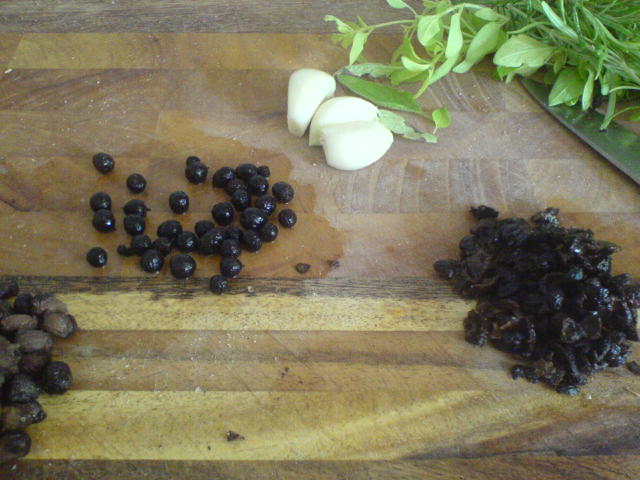
  • Used the preserved mini olives from last year's crop on our tree (and I do mean mini in some cases, see below) to make an olive bread with chopped fresh garlic, chopped herbs and a wonderful oak-smoked, malted wholewheat flour. We ate it two evenings in a row: the first, with stuffed portobello mushrooms and several salads; the second night as part of a mezze supper. It got rave reviews.

8. What I bought:
Avocadoes, stone fruit and portobello mushrooms.

Wednesday, 21 July 2010

Taking the steps towards self sufficiency


A delicious weekend brunch, almost all from the garden.

Although this blog is called "Steps Towards Self Sufficiency", I don't always talk enough about how I go about doing it, in my passion for the food I grow and eat. But I think about ways to take further steps in my own life towards self sufficiency every day. So that's what I'd like to write about today.

I loosely follow a permaculture-based approach to the way I organise my life. While permaculture is often viewed as a way to grow food, the movement created by David Holmgren and Bill Mollinson in the 70s is more than that. It's about looking at your lifestyle and environment and trying to arrange things in a way that is effective. About reducing stress, and effort. About working with nature and your surroundings, not against them. About making problems solutions. You can do this, regardless of where you live, regardless of your lifestyle circumstances.

First, pay attention to what you do in your life. Observe the things you normally take for granted. What are the important things to you? What items in your house do you use the most? What do you buy the most of? Now, how can you make those things rather than buy them? This can cover food, clothing, utensils. When I first started my UK veggie garden, I thought that I would like to have a wicker basket with which to place harvested vegetables in. I couldn't find one in the local shops. That was when I realised that I had a willow tree in my backyard and two hands that worked. So I looked up instructions on basket making on the internet and made a basket. Total cost to me, three hours of enjoyable time. We were looking at garden edgings yesterday and decided we'd weave some out of willow rather than buy anything.

Second: keep a diary of your observations. Do you know how many potatoes you eat in a year? How often do you buy garlic? When were your first/last frost dates? It's important to understand the size of the problem before you try to make big changes to your life. I can tell you just how much we eat of most vegetables in a year, because I try to plant to cover that consumption. But remember that your eating habits will change when faced with fresh veg and you're more likely to eat what's available.

What are your time constraints? Do you work full-time? Are you willing to dedicate one hour each day to self-sufficiency? Do you find you have some social obligation in early May every year, which may prevent you from finishing the spring planting? Do you always take a holiday in the summer school holidays, the prime summer vegetable picking time? Will you come home to giant beans and marrows? Plan your planting accordingly.

Third: make changes slowly. I can't emphasize this enough. It's all very well to plant out 200 runner bean seedlings in May, but come the height of summer when all you're doing is weeding, watering, picking and giving away a glut of beans you'll wish you hadn't. Start growing a few veg in pots, or grow one small garden bed of vegetables in the first year. Next year, or later in the summer, when that garden bed is working well, expand it. Add a few more vegetables, try new varieties. That's the fun. Although I grow a variety of vegetables always, I try to make us completely self-sufficient in one new vegetable each year, and then I maintain that self-sufficiency. Last year it was potatoes. This year it's garlic and we'll have a decent number of onions (although not enough to get us through the year). Next year we'll have more artichokes, enough onions to eat year-round, we'll be growing more grain crops and we want to grow peanuts, for fun. Think about the fertility of your soil. Compost. Mulch. Look after the soil and it will look after you.

Don't try to do too much too fast. If it becomes a chore you're not going to enjoy the experience and are less likely to be effective. How much money are you really spending on those home-grown veg? If it's not value for money, it's not sustainable. But on the other hand, don't be afraid to invest. A few hundred pounds or dollars, spent now on fruit trees and other permanant crops, will yield dividends for years and possibly decades to come.

Think about what you eat year-round. Anyone can grow most of their own veg at the height of summer. The real challenge is to have enough of a variety of vegetables year-round to keep you interested, able to eat seasonally, and not tempted to resort to the shops. Conversely, remember that there's something to be said for keeping the local economy going. There are an increasing number of people in my village who sell their gluts sporadically on tables at the end of their driveway, and I make an effort to buy from them whenever I can. If I buy enough, I may put some up to store for winter. I'll be buying cherries from a neighbour this week for just that, because I ate all of mine fresh.

This is a big one: try to plant something, harvest something and eat something out of your garden, at least once a week, every week of the year. I now try to do this every day, and manage to plant/harvest 4-5 days each week. It takes about 1/2 an hour each time.

If you don't own your property, don't let that stop you. I keep most of my fruit trees and shrubs in pots. I've had crops of cherries, blueberries, artichokes, currants, strawberries and soon plums from pot-grown plants this year: many from trees bought last year. I've grown potatoes, tomatoes, lettuce, grapes, kiwifruit, even a passionfruit in pots. Growing in pots can be a great way to start slowly, work in restricted space, and they can be moved around the garden to suit.

If you do have restricted space, think vertically. Grow climbers up walls, grow veg in hanging baskets. Plant low-growing plants around the edge of beds with taller veg. But if you take this approach, be mindful of how much sunlight your plants are getting.

Forget about the idea of wasting food. Wasting food only counts if you've bought it from a supermarket. There is no waste in a proper self-sufficient system. Are all those radishes too woody and going to seed? Feed them to the chickens, or put them in the compost. They'll increase the fertility of your soil. Or let some go to seed, and save the seed or let them self-seed. I have self-sown parsnips, parsley, amaranth and kale all over my garden. The only way waste counts is if you're throwing food away in the summer when you could be preserving it for winter and are resorting to buying your food in in winter.

Think about your consumption. Each time you want to buy something, stop to think whether you can make it for yourself. If there is a reason you can't, is this something that can be fixed? Will a little time/patience/training allow you to be able to make your own linens, baskets, garden fencing, what have you? If you can't make it right now, is there some way you can work towards being able to? Do you really need eight different types of cleaning chemicals, when you can do most cleaning with soap, bicarbonate of soda and vinegar? Do you need a plastic bag? Are you buying things for the sake of having them? I barely ever walk into a shop these days, mostly because they offer so few things I want.
There's no one answer to how to move more towards a self-sufficient lifestyle, because everyone's life is different. The best thing you can do is to pay attention to your own rates of consumption and use that as a guide to where gradual changes can be made painlessly. Little changes, made often and maintained, are what build habits and a lifestyle. It's so much more rewarding to use items you've provided for yourself.